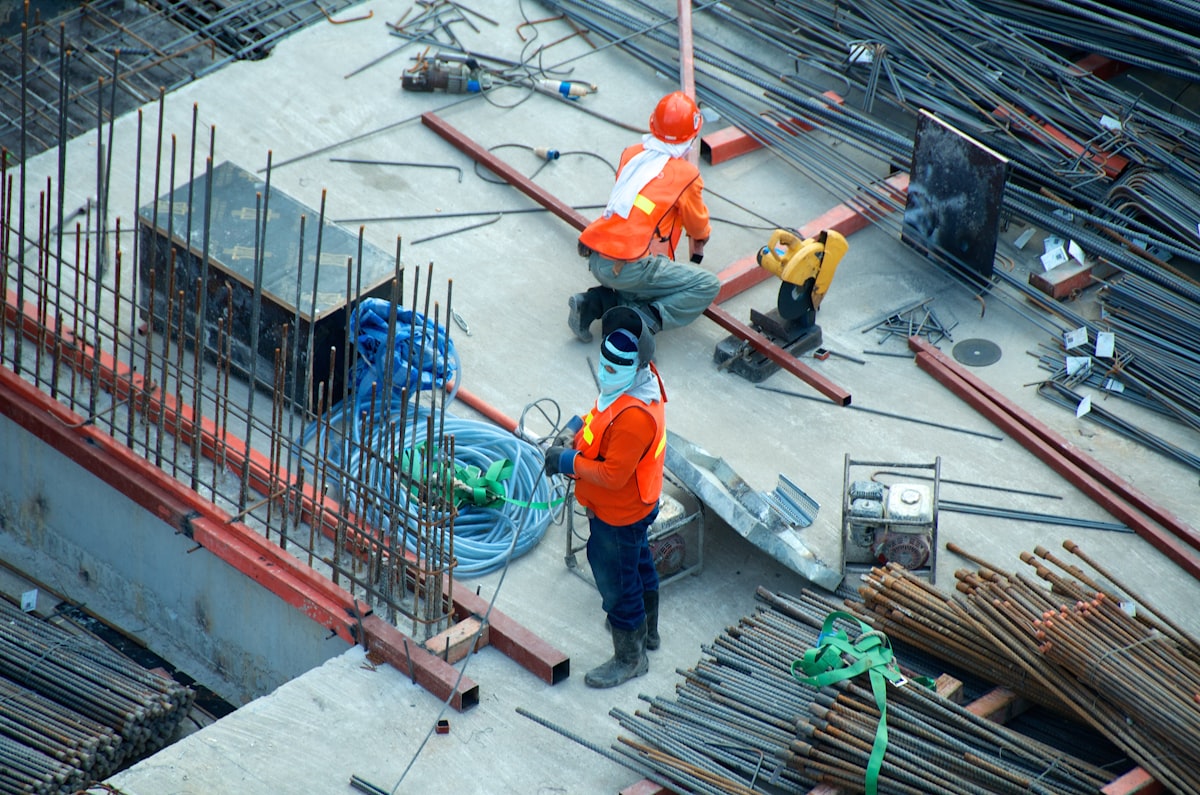
Behind every wall is a decision — brick or RCC? Load-bearing or framed? Here's why structural choices determine how long your home actually lasts.
What Is RCC and Why Should You Care?
RCC stands for Reinforced Cement Concrete — a composite of concrete (cement, sand, aggregate, water) and steel reinforcement bars (rebar). The concrete handles compression (pushing forces), while the steel handles tension (pulling forces). Together, they create a structural system that resists earthquakes, wind loads, and the weight of the building itself. Why does this matter to you? Because load-bearing brick construction — still common in many parts of Haryana — has a structural lifespan of 30–40 years. A well-built RCC frame lasts 75–100 years. Your grandchildren will inherit the structure, not just the property papers.
The 40-Point Quality Checklist
At Kronus, every floor of every building passes through 40+ quality checkpoints before the next floor is cast. These include: rebar diameter verification, cover block placement (to prevent corrosion), concrete slump testing (for workability), cube testing (for compressive strength at 7 and 28 days), plumb bob checks for column verticality, and waterproofing membrane integrity tests. We use only ISI-certified TMT steel (Fe-500D grade) and OPC-53 grade cement. Every batch of concrete is tested on-site using a calibrated slump cone. If a batch fails, it's rejected — no exceptions, no rework.
Earthquake Resistance: Not Optional in Sonipat
Sonipat falls in Seismic Zone IV on the BIS map — the second-highest risk category. This means buildings must be designed to withstand moderate to severe earthquakes. RCC framed structures, when designed per IS 13920 (ductile detailing), perform significantly better than load-bearing structures in seismic events. The key is ductility — the ability to deform without collapsing. Our structural designs include shear walls, proper beam-column joints with 135° hooks, and lap lengths that exceed code minimums by 15%. When the ground shakes, a Kronus building bends. It doesn't break.
What Corners Look Like When They're Cut
Low-quality construction isn't always visible. Common shortcuts include: using thinner rebar (8mm instead of 12mm), reducing cement content in concrete (saving ₹50/bag but halving strength), skipping waterproofing in bathrooms and terraces, using river sand instead of manufactured sand (inconsistent grading), and curing concrete for 3 days instead of the mandated 14. These savings amount to maybe ₹200–300 per square foot for the builder — and decades of reduced structural life for the buyer. Ask your builder for material test certificates. If they hesitate, you have your answer.

Sukhdeep Singh
Chief Engineer, Kronus Infratech
Building homes and communities in Sonipat since 2014. Got a question about this article? Reach out directly.